

System Design and Behavioral Intelligence - Book Review
System Design and Behavioral Intelligence - Book Review
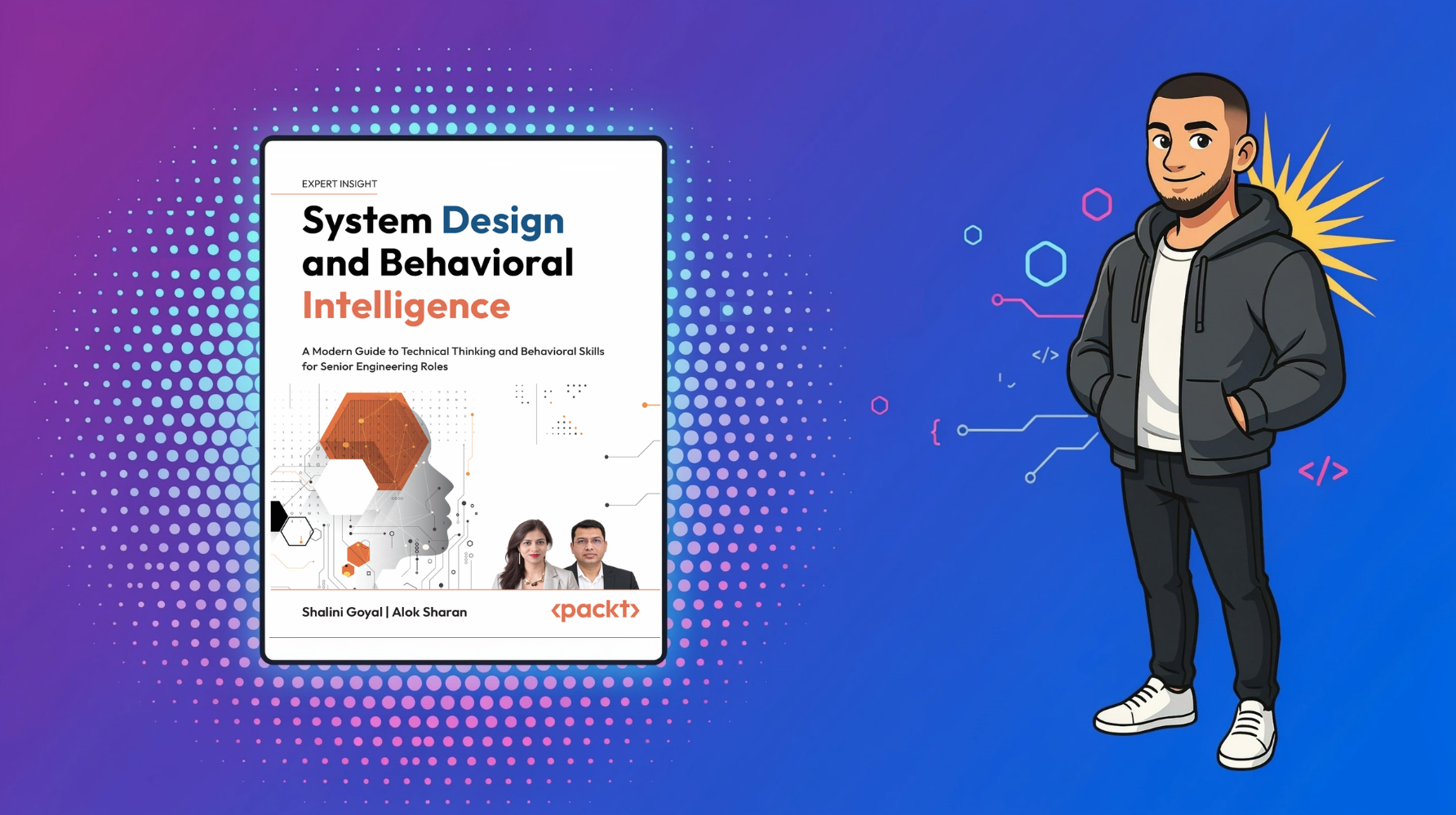
Expert insights on Azure AI architecture and implementation. Real-world solutions for building intelligent enterprise systems.
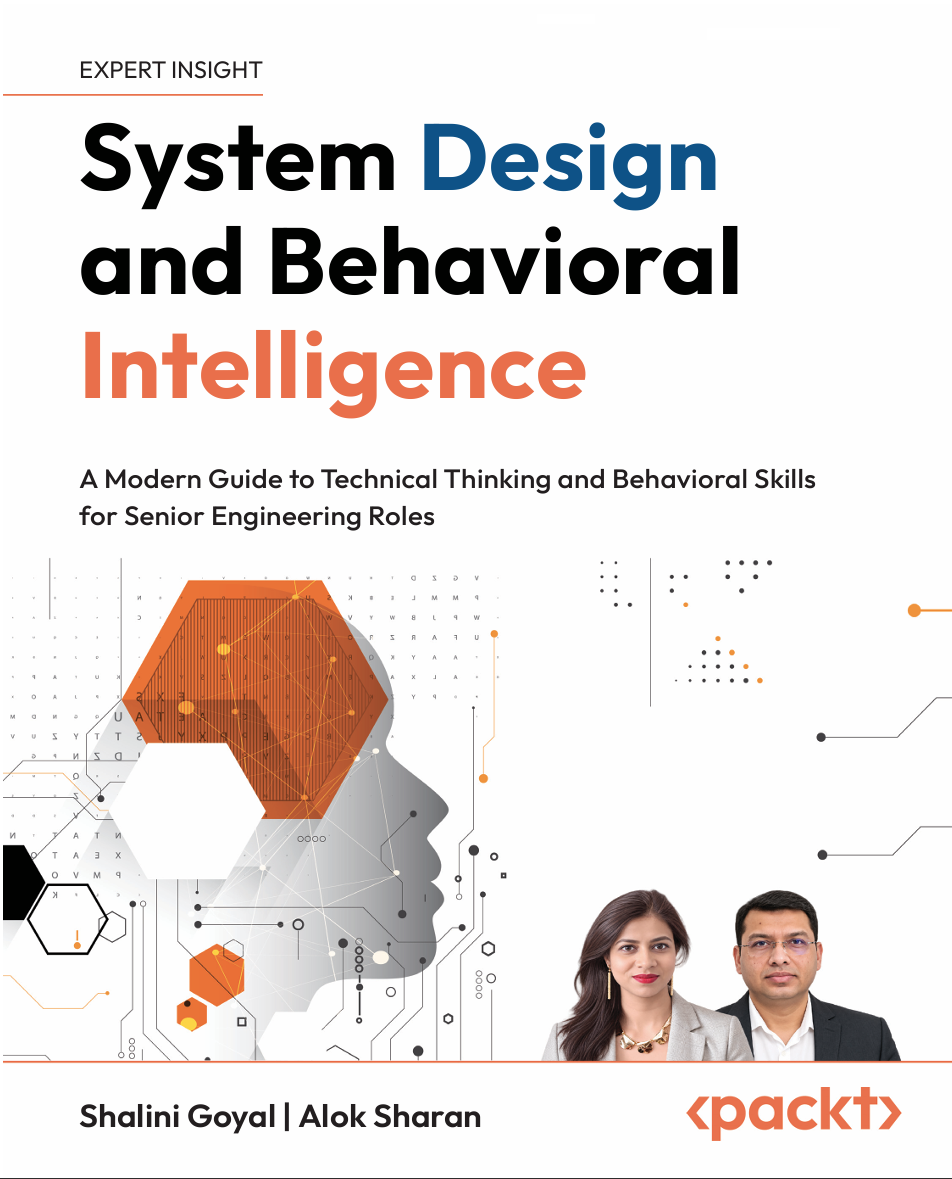
Most system design books stop at diagrams and trade-offs. Most behavioral interview guides stop at STAR stories. This one argues — convincingly — that the two are inseparable, because interviewers (and careers) evaluate both your architecture and how you reason and communicate your way to it.
Part 1: What You Can Build
The book opens by framing system design not as memorized solutions but as a trail of decisions and trade-offs, built on domain knowledge, design skill, and behavioral intelligence — the three things it argues AI hasn't displaced. From there it methodically builds a shared vocabulary: network models and protocols, DNS resolution, symmetric vs. asymmetric encryption, hashing vs. checksums vs. tokenization, and the throughput/latency/bandwidth distinctions interviewers love to probe.
It then moves into the algorithms and patterns that make distributed systems actually work — Snowflake IDs for globally unique ordering, consistent hashing for even data distribution, Raft for consensus, Bloom filters for cheap membership testing, and resilience patterns like circuit breakers, Merkle trees, and scatter-gather.
The building-blocks chapter is the densest: stateful vs. stateless services, sticky sessions, load balancing, sync vs. async communication, SQL vs. NoSQL decision-making, API gateway design, and a clear breakdown of when to reach for WebSockets (full-duplex, chat apps), SSE (one-way server push), or webhooks (server-to-server events).
A full chapter on security and observability covers encryption at rest/in transit, JWT-based stateless auth, OAuth2/OIDC, RBAC vs. ABAC, rate limiting vs. throttling, and the logs/metrics/traces triad — plus a pointed reminder never to log PII.
Where the book earns its keep is the case study chapters: a Slack-like messaging system (with per-channel append-only logs for ordering), a distributed key-value datastore built around write-ahead logs and partitioning, a millisecond-latency real-time bidding platform, an Instagram-like system covering fan-out and presigned URLs for media uploads, and — the standout — an agentic AI system for investment research, complete with tool-access guardrails, a forward-proxy allow-list, golden-dataset regression testing, and negative/adversarial testing for prompt injection.
Part 2: How You Behave While Building It
The second half redefines behavioral intelligence as a learnable, observable set of choices — distinct from IQ and from emotional intelligence — that predicts performance and gets tested deliberately in interviews. It walks through real workplace friction (conflict resolution via RACI, risk mitigation, stakeholder alignment via Mendelow's Matrix and the Salience Model, DORA metrics for engineering performance) before turning to interview preparation itself: building a story bank, calibrating stories to seniority using STAR, STAR+R, CAR, CARL, SOAR, and PAR, and understanding that a JD is a signal, not a checklist.
The closing chapters pull back the curtain on how Big Tech interviews are actually scored — core values as the real evaluation criteria, live scorecards, level calibration — and then look past the offer: negotiating, onboarding in the first 90 days, and eventually becoming the interviewer yourself.
Takeaway
The book's real argument isn't "learn system design, then learn to interview." It's that clear technical thinking and clear communication are the same underlying discipline — and that discipline, not any single technology, is what actually gets evaluated.


